Automatically translated with AI
This page was automatically translated using AI and serves as an additional aid and service. For legally binding content, please use the German page.
You have applied for protection in Austria. During the asylum procedure, you will receive accommodation and food through basic services.
This page contains important information and rules for asylum seekers. Austria may have different rules and laws than your country of origin. Therefore, please inform yourself thoroughly and adhere to the regulations and laws! You can listen to the text here in English, Arabic, and Dari-Farsi.
If you have questions or need support, please contact the information point in your neighborhood (BBE). Further information can also be found on the BBU website: bbu.gv.at.
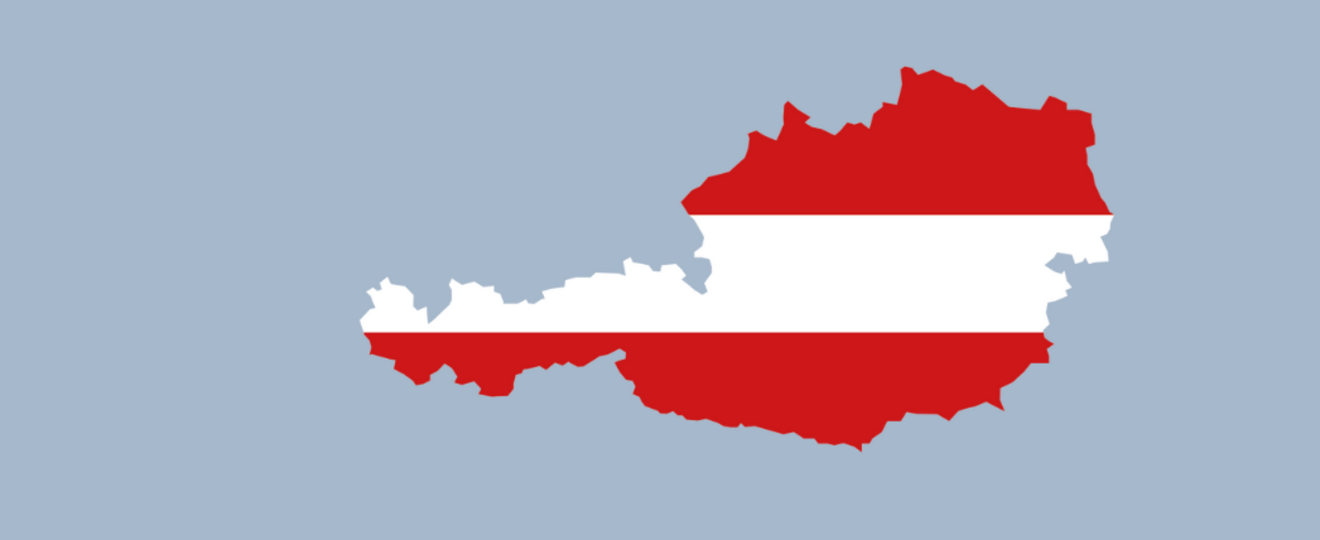
Austria is a republic with a democratic form of government.
The country has approximately 9.2 million inhabitants, of whom around 2 million live in the capital city of Vienna.
Austria has 9 federal states: Burgenland, Carinthia, Lower Austria, Upper Austria, Salzburg, Styria, Tyrol, Vorarlberg and Vienna.
The highest mountain in the country is the Großglockner with a height of 3,798 meters and the longest river is the Danube, which has a length of 2,888 kilometers.
Austria borders eight neighboring countries: Germany, Czech Republic, Slovakia, Hungary, Slovenia, Italy, Switzerland and Liechtenstein.
Austria is a member of the European Union (EU) and its currency is the Euro. The official language is German.
Emergency call and emergency numbers
Fire department: 122
Police: 133
Rescue: 144
European emergency number: 112

Austria is a democracy. In a democracy, there are regular free elections.
The people elect their representatives to parliament. These representatives make the laws for Austria.
There are laws that regulate coexistence in Austria. Everyone must abide by them.
Everyone has the right to express their opinion freely. However, one must obey the law.
State and religion are separate. Religion is not above the law.
Everyone is free to choose their religion or to have no religion. The largest religious group is Christianity.
Before the law, every person is equal: gender, appearance, nationality and religious affiliation play no role.
Anyone who violates Austrian laws must expect to be punished. This can be a fine or imprisonment.

Every human being has human dignity. All people are of equal worth.
Every person is equal before the law.
All people have the same human rights.
Austria has laws against violence and hate.
Against antisemitism
Antisemitism means hostility towards Jews and is directed against Jews, their property and religion, as well as against Jewish institutions. Antisemitism is illegal in Austria.
Anyone who says or does antisemitic things will be punished. There is a law prohibiting antisemitism. Symbols of extremist groups are prohibited.
Groups are banned, including the swastika and symbols of the terrorist organization Hamas. Anyone carrying a Hamas flag, for example, will be punished.
It is forbidden to incite hatred or violence against people. Discriminating against people because they are different violates their human dignity. Anyone who incites hatred or calls for violence can be punished.

The police ensure security in the country.
The police help in dangerous situations and solve crimes. The people of Austria trust the police.
Police officers can be recognized by their blue uniform and a blue or white cap.
They have a police ID.
The police also monitor traffic. For example, if you cross the street or drive through a red light, you can be fined.
You can get a fine.
The police abide by Austrian laws.
Always follow the instructions of the police.
In case of an accident, a crime, or danger, call the police. There is an emergency number for this purpose.
under the number 133 and the European emergency number 112.
Courts decide on the punishment. The severity of the punishment is regulated by law. In addition to fines, there are also prison sentences for serious crimes.

It's important to know what is and isn't allowed in Austria. Ignorance of the law is no excuse! Here are some examples of offenses that can result in a fine or imprisonment.
Violence: Intentionally injuring other people is prohibited. Psychological violence can also be punished.
Domestic violence: Violence against all family members is prohibited. This includes women, men, and children.
Rape: Rape is illegal and will be severely punished.
Sexual harassment: Touching or sexually harassing other people against their will is prohibited.
and punishable by law.
Disrespectful conduct: Insults and rude behavior are not permitted.
Noise: Loud shouting or loud music, especially at night, is prohibited. In Austria, quiet hours are from 10 p.m. to 6 a.m.
Fare evasion: Riding a bus, train, or subway without a ticket is prohibited. Fines are imposed.
Dangerous threat: Threatening other people in such a way that they become afraid is prohibited.
Illegal drugs: Illegal drugs such as cocaine, heroin and marijuana are prohibited.
False statements: Making false statements in court, to the police or to authorities is prohibited.

The man must not control the woman. The woman must not control the man. Everyone can control themselves.
Both parents take good care of their children together and also consider their children's opinions.
They make sure their children attend school.
A woman decides for herself whether and with whom she has a relationship and whom she marries.
Every woman has the right to choose her own husband. Likewise, every man has the right to choose his own wife.
choose.
Forced marriages are illegal in Austria.
Women and men have equal rights in Austria.
Women can decide for themselves whether they want to go to work. Women meet up with friends and
Going to a coffee shop alone with friends or going to the cinema alone.
Women are allowed to have relationships and live with women, and men are allowed to live with men.
Women and men can get divorced and then marry new partners.
Women can work in all professions. It is important that women receive an education and...
earn your own money.
Violence is strictly prohibited and punishable in Austria. There must be no violence, even within the family.
against women and children.
Girls and boys receive the same education and have the
Equal opportunities. There are no differences in upbringing.

Be considerate of other people in public spaces
and in means of transport.
Greet people politely. In Austria, it's customary to look the person in the eye when greeting them. People often shake hands when greeting each other.
Noise disturbs many people. Speak quietly on public transport and in public buildings.
Use headphones when listening to music on public transport or in public spaces. From 10 p.m.
In Austria, quiet hours last until 6 a.m.
In Austria, waste is collected separately. There are separate containers for glass, metal, plastic, etc.
Paper, organic waste and residual waste.
Separate your waste and throw it into the correct containers.
Keep public spaces and green areas clean. Don't litter. Dispose of cigarette butts in ashtrays or trash cans.
Be punctual, especially for appointments at government offices. Being late is impolite.
Smoking is prohibited on public transport and in buildings.
Only smoke in designated smoking areas, such as those found at train stations. Observe the "No Smoking" sign. Smoking is not permitted there.

You have the right to an asylum procedure. Inform yourself thoroughly about the asylum procedure. Information can be found on the website of the Federal Office for Immigration and Asylum (BFA) ( bfa.gv.at) or the BBU GmbH ( bbu.gv.at). If you have any questions, contact legal advice centers.
They receive three meals a day, hygiene products, and clothing. If you are in a federal care facility...
You will receive a monthly allowance if you live there.
You will receive a procedure card. Always carry the procedure card with you. The Green Card
This means that the application process begins and you are not allowed to leave your district. The white card means that the asylum procedure will be conducted in Austria. You are now allowed to leave the district.
You can work at the Federal Care Center and earn money. The work is voluntary.
The BFA house rules apply in the federal care facilities.
You must abide by these house rules.
You must inform the asylum authorities if you change your address. You must do so in Austria.
They must remain in their current location and are not permitted to move their residence to another Austrian federal state.
They receive medical care just like Austrians.
You must inform your accommodation provider if you are leaving your accommodation for more than 48 hours. The authorities must be able to contact you, and you must arrive on time for your appointments.
If you wish to return to your home country, contact the BBU return counselling service.


Positive asylum decision:
With a positive asylum decision, you are allowed to stay in Austria for three years. If there are still grounds for asylum after three years, your right of residence in Austria will be extended.
If you have been granted subsidiary protection, you are allowed to stay for one year.
Asylum seekers and those granted subsidiary protection are allowed to work and have free access to the labor market.
You can get a passport and are allowed to travel abroad, but not to your country of origin.
You have a right to German language courses and integration measures such as values and orientation courses. You must participate in these courses.


Negative asylum decision:
If your asylum application is rejected, you must leave Austria.
You can appeal a negative asylum decision. Go to the BBU legal advice center.
You will receive support for a voluntary return to your home country.
If you do not leave voluntarily, the authorities can order your deportation.
German is the official language in Austria and important for your life there. If you are granted asylum in Austria, you will need German for everyday life, at work, and when dealing with government offices.
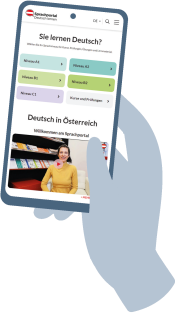
The ÖIF learning platform sprachportal.at offers free online courses, exercises, and materials for learning German around the clock. Take advantage of these free resources!
Speak German as often as possible in everyday life. Speak German when shopping or ask for help.
Ask for directions in German.
Learn German at every opportunity!